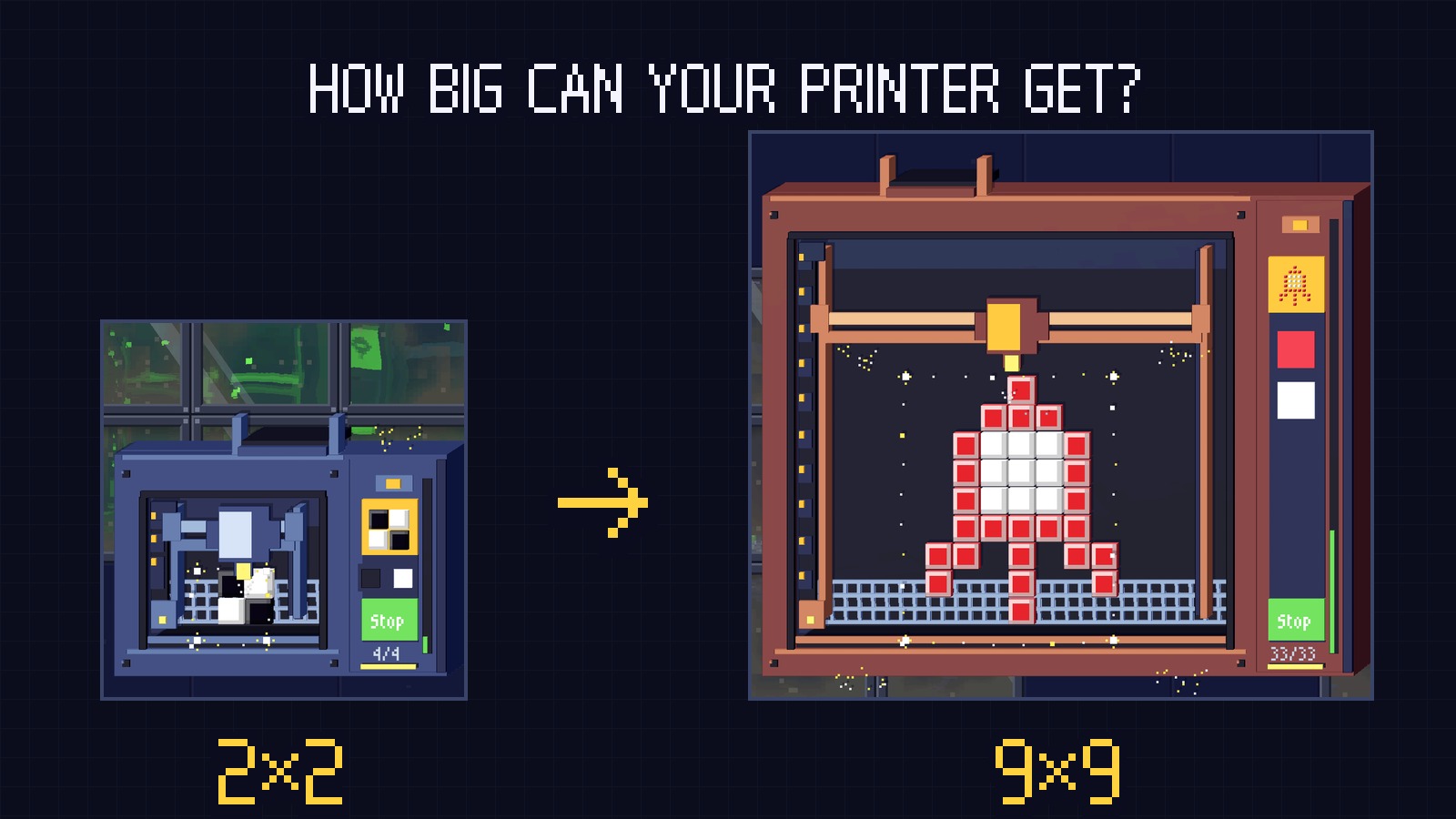
In Pixel Sorter Factory, pixels aren't only sold: they get printed. Feed pixels to a printer and its head paints them, cell by cell, into a little piece of pixel art that sells for far more than the same pixels sold loose. There are eight sizes, from the tiny 2×2 to the huge 9×9. Here they all are, side by side, each with a shape it has just finished.

How a printer works
Pick a pattern, then bring it pixels: by hand, on a conveyor, down a tube. They fill the printer's box, and the print head comes down on each cell and paints it the right colour. When the last cell is done, the shape sparkles, its value pops up, the bed opens and lets it out. Then the printer starts the next one on its own. A Start / Stop button pauses it, a gauge on its console shows how full its box is, and if a colour is missing, the console tells you which one.
Bigger prints pay more
A printed shape is worth its pixels times the printer's yield: ×3 on the 2×2, then 25% more with each size, up to ×14.3 on the 9×9.
- Four black and white pixels sold loose make 40 credits. Printed as a 2×2 checkerboard: 120.
- Fill a 9×9 with black and white and it sells for 11,587. The same 81 pixels sold loose: 810.
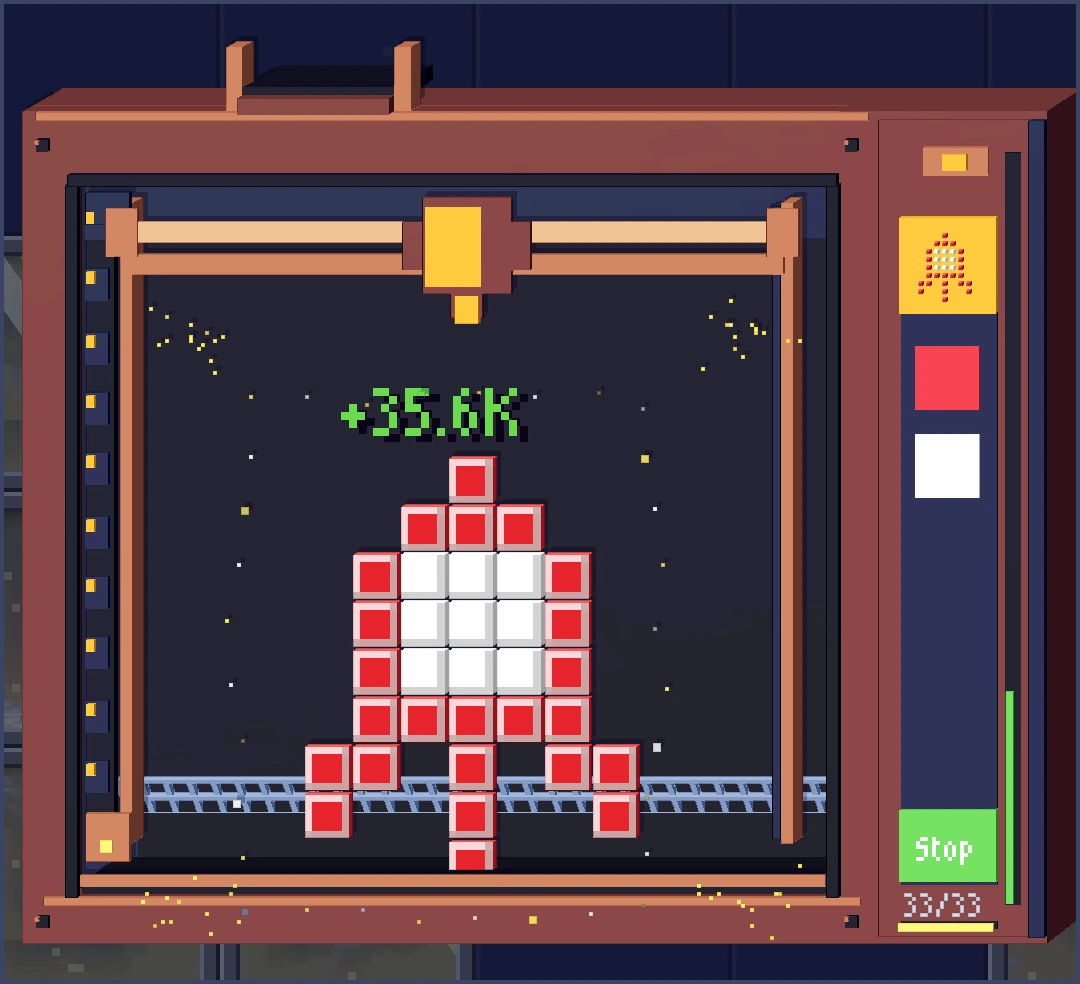
- A coloured pixel keeps its value inside the shape, so a red cell is worth ten black ones. The red and white rocket of the 9×9 sells for 35,620 credits.
And there is no upgrading a printer. Each size is its own machine, a new purchase with a bigger frame: one grid cell wider and one taller than the size before. You work your way up from the small ones to the big ones, Factorio style.
The small ones: 2×2 and 3×3
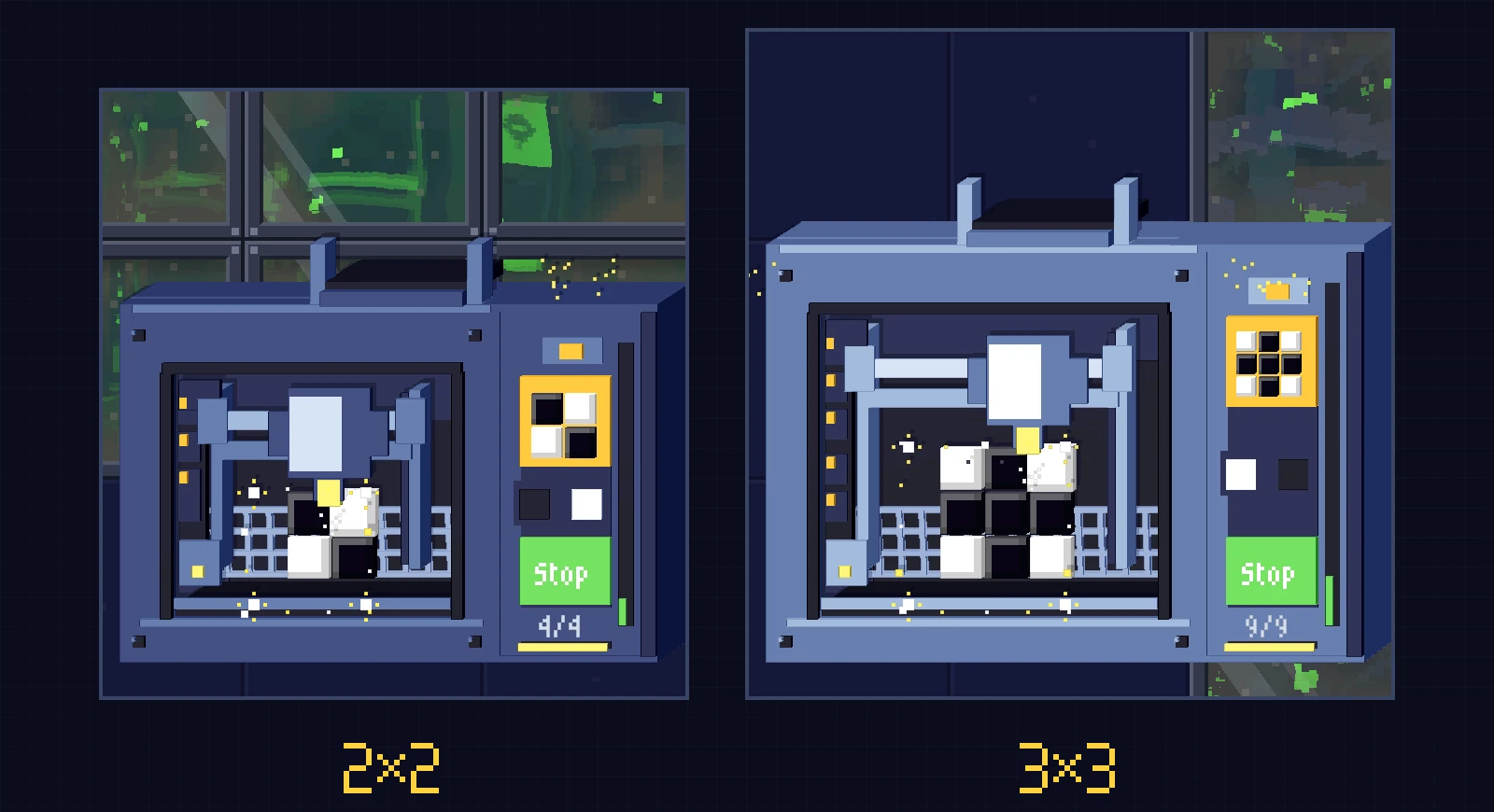
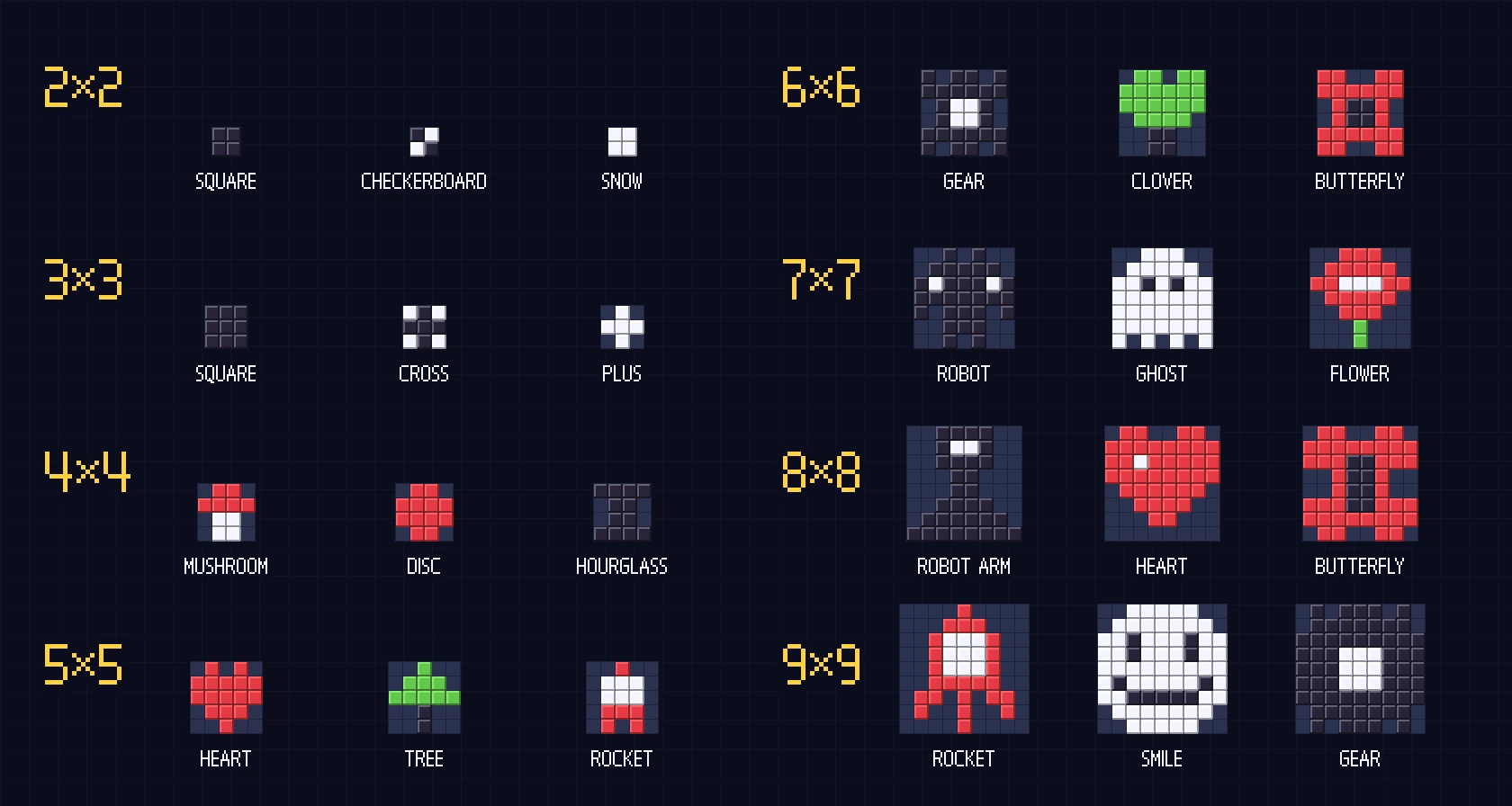
The first printers of the factory, and the only ones that take nothing but black and white. The 2×2 is the first one you research, and Didier, your colleague, shows you where to put it. Their patterns are as simple as pixel art gets: Square, Checkerboard and Snow, then Cross and Plus.
The medium ones: 4×4, 5×5 and 6×6
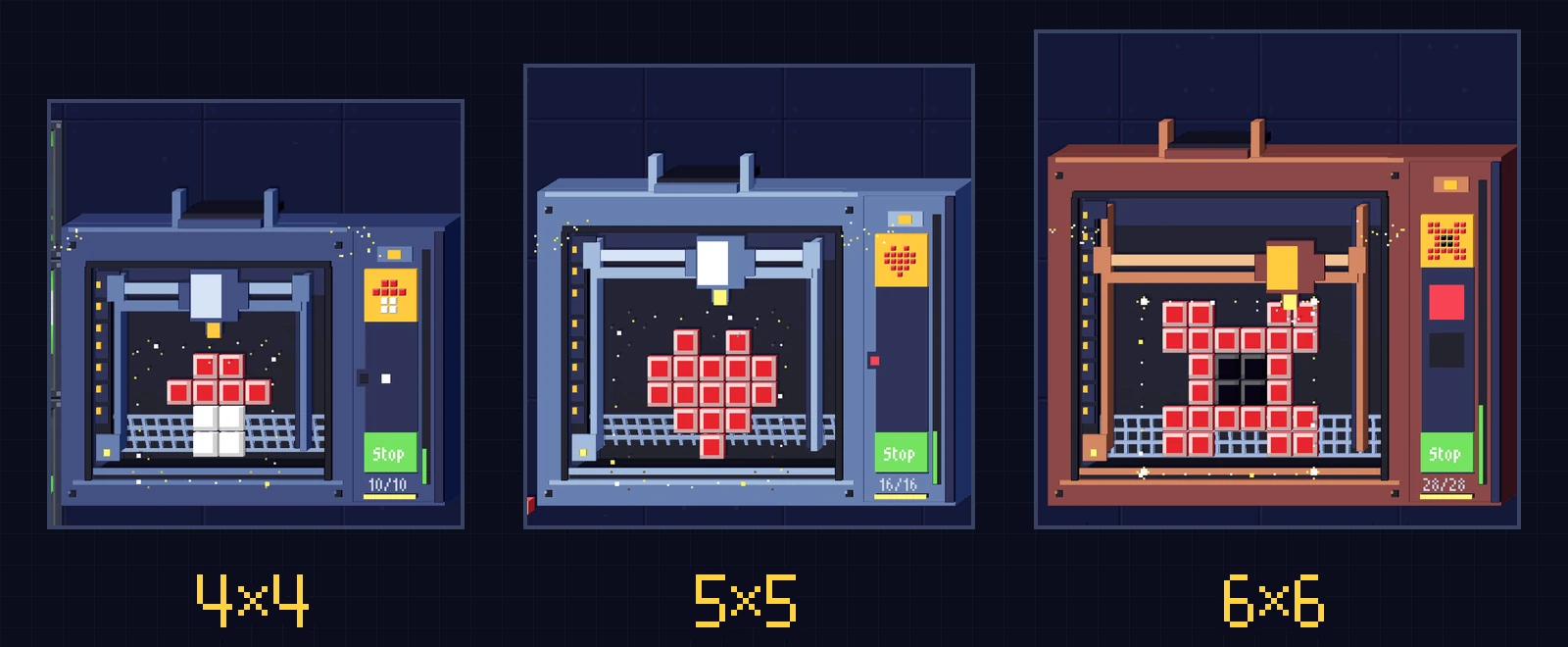
Red joins the palette on the 4×4, green on the 5×5. With 16 to 36 cells, the shapes start to look like something: a mushroom, a heart, a tree, a rocket, a clover, a butterfly.
The large ones: 7×7, 8×8 and 9×9
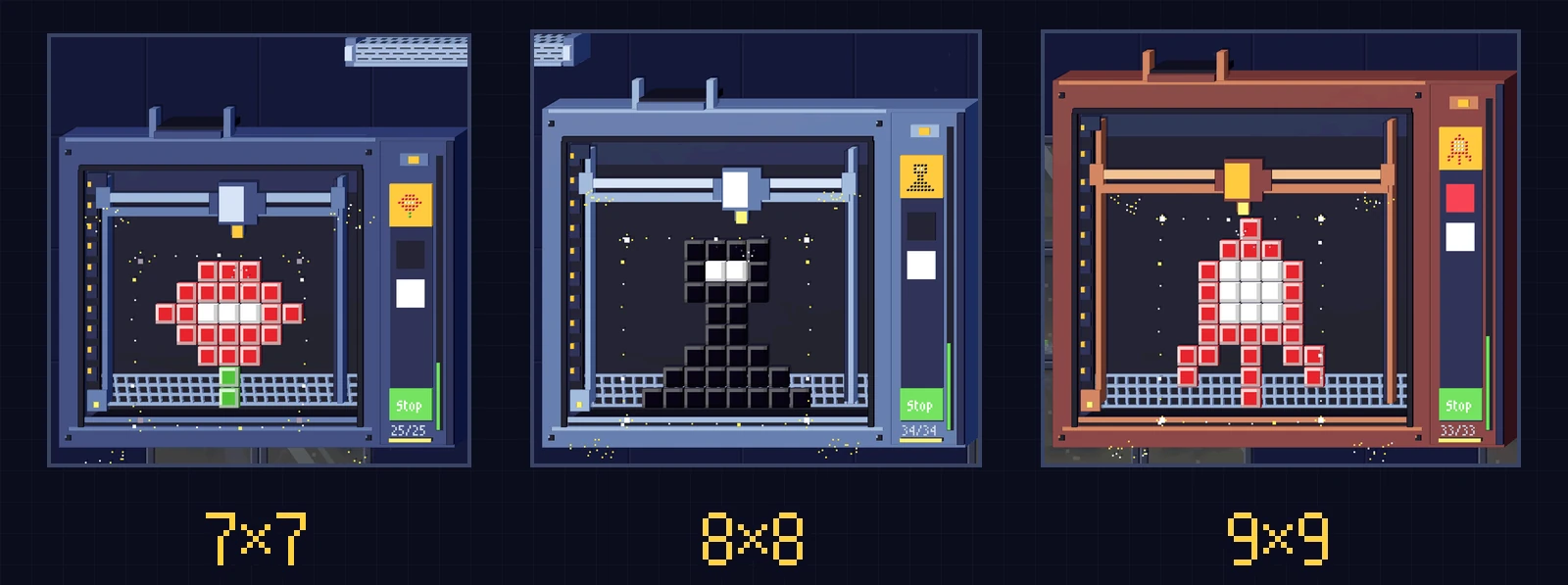
The big printers take every colour. A robot, a ghost, a flower, a robot arm, a smile, a gear, a rocket: up to 81 cells, and the biggest prints of the game.
24 patterns to start with
Every size comes with three patterns. They are the ones the orders of the helipad ask for: an order for a 5×5 heart is filled with a 5×5 printer.
Draw your own pixel art
Behind its three patterns, every printer has a Draw box. It opens a canvas the size of the printer: left click paints (hold and drag), right click erases, with Fill and Clear. The palette offers the colours that printer takes, and the editor tells you what your shape will be worth before you save it. Save, and the printer starts printing it right away.
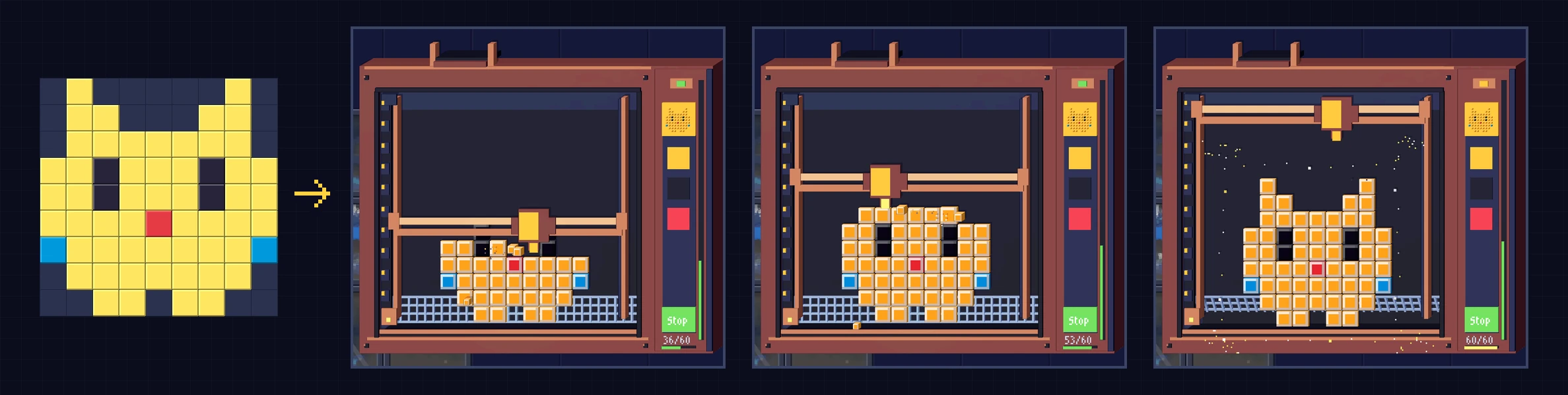
You can keep six drawings per size, shared by every printer of that size in your factory: retouch one and they all follow. A drawing pays like a supplied pattern, each cell at the value of its pixel: more pixels, rarer pixels, more credits. We drew a yellow cat on the 9×9. Sixty cells, and over 80,000 credits a print.
Try it
The demo on November 5 has the 2×2 printer, its patterns and its canvas. The seven bigger sizes come with the full game.
Add the game to your wishlist so Steam tells you the moment the demo is out, and come show us your best drawings on Discord.